Zinc, Magnesium & Tinnitus: What the Research Says (and Where Audifort Fits)

If tinnitus has ever sent you down a late-night research spiral, you've probably come across zinc and magnesium — two minerals that show up again and again in forum threads and supplement labels claiming to support ear health. The honest answer is more nuanced than either camp admits: one has real, if modest, clinical support in a specific group of people, and the other has been formally reviewed and found lacking. Here's what the actual studies say, not just what the marketing implies.
Why Zinc and Magnesium Come Up in Tinnitus Discussions
Tinnitus — the perception of ringing, buzzing, hissing, or humming with no external sound source — isn't a disease on its own. It's a symptom, usually linked to noise exposure, age-related hearing changes, or, less often, an underlying medical issue. Because it originates in how the inner ear and auditory nerve process (or misfire) signals, researchers have long looked at nutrients involved in nerve function and cellular metabolism as possible levers.
Zinc and magnesium get discussed together because both play roles in the auditory system, both are commonly under-consumed in modern diets, and both are inexpensive, widely available, and generally low-risk to try. That doesn't mean the evidence for each is equally strong — as you'll see below, it isn't.
Quick Summary of the Evidence
| Mineral | Best-supported use case | Strength of evidence | Bottom line |
|---|---|---|---|
| Zinc | Correcting a confirmed zinc deficiency in tinnitus patients | Weak / mixed | A 2016 Cochrane review of 3 randomized trials (209 people) found no evidence zinc improves tinnitus symptoms generally. A smaller 2019 trial in noise-induced hearing loss patients found symptom-scale improvement, but no change in objective hearing tests. |
| Magnesium | Noise-induced hearing loss prevention; possibly reducing tinnitus-related distress | Moderate for prevention, preliminary for treatment | Studies including a placebo-controlled trial in military recruits link magnesium to protecting hearing during loud noise exposure. A small open-label Mayo Clinic pilot study found reduced tinnitus handicap scores after 3 months, but it lacked a placebo group. |
| Both together | No dedicated combination trials for tinnitus | Theoretical / extrapolated | No published human trial has tested zinc plus magnesium specifically for tinnitus as a combined protocol. |
Takeaway: magnesium has somewhat more encouraging (though still limited) research behind it, particularly for people with noise-exposure-related tinnitus. Zinc's evidence is weaker and more inconsistent, and mainly relevant if you have an actual deficiency rather than as a general fix.

How Zinc May Affect Tinnitus
Zinc is involved in immune function, cell growth, and nerve signaling, and it's present in unusually high concentrations in the cochlea (the inner ear's hearing organ) compared to other tissues in the body. That biological plausibility is part of why it's been studied for tinnitus at all.
Cochrane: no general benefit Possible benefit in confirmed deficiencyThe strongest look at the evidence comes from Cochrane, the international group known for rigorous, bias-checked reviews of medical research. Their 2016 review pooled three randomized, placebo-controlled trials totaling 209 adults with subjective tinnitus. Across the trials, oral zinc supplementation did not outperform placebo on validated tinnitus severity measures, and the review authors rated the evidence quality as low to very low due to small sample sizes and methodological issues.
A more recent and more targeted 2019 clinical trial looked specifically at people with tinnitus tied to noise-induced hearing loss — a narrower group than Cochrane's mixed-cause pool. In that study, Tinnitus Handicap Inventory (a standard symptom-scoring questionnaire) scores improved significantly after zinc treatment, especially in younger participants whose blood zinc levels rose the most. However, objective hearing measurements (like otoacoustic emissions) did not improve, meaning the perceived symptom eased without a measurable change in ear function.
Put together: zinc isn't a proven general tinnitus treatment, but it may have a role for a specific subgroup — people with genuinely low zinc status and noise-related tinnitus — rather than as a blanket recommendation.
Zinc Deficiency and Ear Ringing
Zinc deficiency is uncommon in people eating a varied diet in the U.S., but it's more likely in older adults, people with restrictive or vegetarian/vegan diets, people with gastrointestinal conditions that impair absorption (like Crohn's disease), and heavy alcohol users, since alcohol both reduces zinc absorption and increases how much the body excretes.
A South Korean population study using national health survey data found tinnitus was more common among people with low measured blood zinc levels — an association, not proof of cause and effect, but consistent with the idea that correcting an actual deficiency (rather than supplementing on top of already-normal levels) is where zinc is most likely to help.
Best Forms of Zinc for Supplementation
Not all zinc supplements absorb the same way. The three most common forms sold for general supplementation are:
- Zinc picolinate — often marketed as the most bioavailable form, due to picolinic acid's role in helping transport minerals across the gut lining.
- Zinc citrate — a well-absorbed, moderately priced form with a milder taste, common in lozenges and capsules.
- Zinc gluconate — one of the most widely studied and inexpensive forms, frequently used in over-the-counter cold remedies and general supplements.
None of these forms has been specifically compared head-to-head for tinnitus outcomes — the studies above generally didn't specify or standardize form. If you're choosing based on general absorption research, picolinate and citrate tend to edge out gluconate slightly, but the difference is unlikely to be the deciding factor for tinnitus specifically.
Typical Zinc Dosage Ranges
The U.S. adult Recommended Dietary Allowance (RDA) for zinc is 11 mg/day for men and 8 mg/day for women, according to the National Institutes of Health Office of Dietary Supplements. The Tolerable Upper Intake Level — the ceiling considered safe for regular use — is 40 mg/day for adults from all sources combined, food included.
The clinical trials on zinc and tinnitus generally used doses in the 15–50 mg/day elemental zinc range over 8–12 weeks. More is not better here: doses of 50 mg/day or higher sustained over weeks can interfere with copper absorption and immune function, according to the NIH fact sheet. If you're considering a dose above the 40 mg upper limit, that's a conversation for a doctor, not a self-directed decision.
How Magnesium May Affect Tinnitus
Magnesium's proposed role in hearing is more mechanistically specific than zinc's. Inside the cochlea, magnesium helps regulate calcium channels in the hair cells that translate sound vibrations into nerve signals. When magnesium is low, those channels can let in excess calcium, which triggers an overrelease of glutamate — a neurotransmitter that, in excess, is thought to overstimulate the auditory nerve and contribute to the phantom signal perceived as tinnitus.
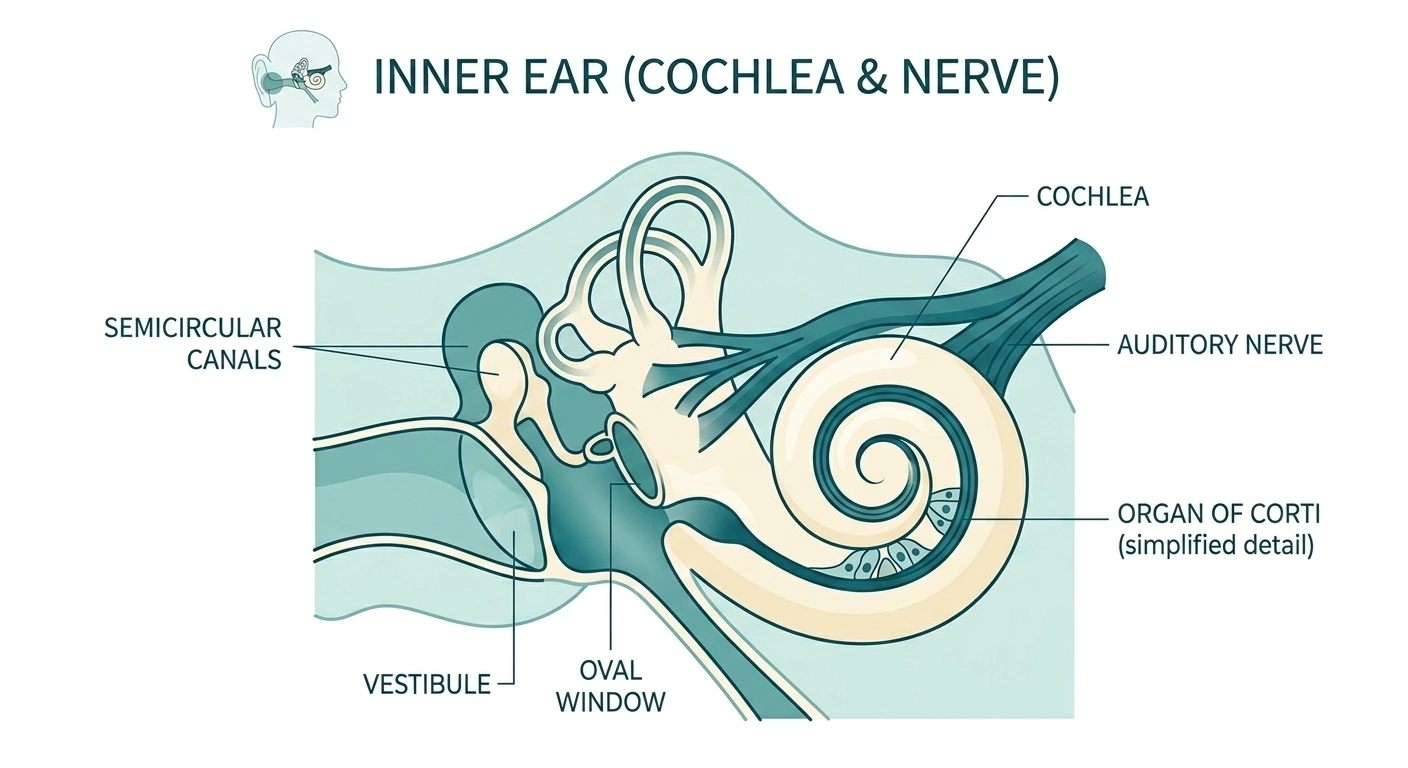
That mechanism has been studied since the 1980s, largely in the context of preventing noise-induced hearing loss rather than treating existing tinnitus. A placebo-controlled study of 300 young military recruits undergoing repeated loud noise exposure during training found that those given daily elemental magnesium had significantly fewer and less severe noise-induced hearing threshold shifts than the placebo group. Animal studies have shown a similar pattern: rats on magnesium-deficient diets sustain measurably worse noise-induced hearing damage than rats with adequate magnesium intake.
The evidence for treating existing tinnitus, rather than preventing new noise damage, is thinner. A Mayo Clinic phase 2 pilot study gave 26 people with tinnitus 532 mg of oral magnesium daily for three months. Using the Tinnitus Handicap Inventory, researchers reported a statistically significant reduction in tinnitus-related distress by the end of the study. That's a genuinely encouraging signal — but it's important to read the design honestly: this was a single-arm, open-label study with no placebo comparison group, so some of the improvement could reflect natural fluctuation, expectation effects, or regression to the mean rather than magnesium itself. Larger, controlled follow-up trials haven't yet been published.
Magnesium Forms Worth Considering
Magnesium supplements vary widely in absorption and side-effect profile:
- Magnesium glycinate — bound to the amino acid glycine, generally well tolerated and less likely to cause loose stools, often preferred for daily use.
- Magnesium citrate — well absorbed and inexpensive, but more likely to have a laxative effect at higher doses.
- Magnesium malate — paired with malic acid, sometimes favored for energy-related uses; reasonably well absorbed.
- Magnesium threonate — marketed for its ability to cross into brain tissue more readily, studied mainly for cognitive outcomes rather than hearing; it's the least studied of the four for general supplementation purposes and typically the most expensive.
None of the human tinnitus studies cited above specified an exotic form — the Mayo Clinic pilot and the recruit study both used standard elemental magnesium. If tinnitus is your main reason for supplementing, glycinate or citrate are reasonable, well-studied starting points; threonate's added cost isn't currently justified by ear-specific evidence.
Typical Magnesium Dosage Ranges
The RDA for magnesium is 400–420 mg/day for adult men and 310–320 mg/day for adult women, according to NIH. Because magnesium from food doesn't carry the same risk profile as supplemental magnesium, the Tolerable Upper Intake Level of 350 mg/day applies specifically to supplemental magnesium, not total dietary intake — the limiting factor at higher doses is diarrhea, not toxicity.
The Mayo Clinic tinnitus pilot study used 532 mg/day, above the standard 350 mg supplemental upper limit, under clinical supervision. A 2023 nutrition-research perspective piece has argued the current 350 mg upper limit may be overly conservative based on newer safety data, but it remains the official reference figure. Taking magnesium with food can reduce GI upset, and splitting a higher total dose across two smaller doses (morning and evening) tends to be better tolerated than one large dose.
Zinc vs Magnesium for Tinnitus
If you're deciding which one to try first, here's the honest comparison:
- Evidence quality: Magnesium has a more coherent mechanistic story and slightly more encouraging (though still preliminary) human data for tinnitus specifically. Zinc's best-quality evidence (the Cochrane review) found no general benefit.
- Who it's more likely to help: Zinc is most plausible for people with a confirmed or likely deficiency. Magnesium's prevention data is strongest for people with ongoing noise exposure (musicians, construction workers, military personnel); its treatment data is preliminary for people with existing tinnitus of any cause.
- Side-effect burden: Magnesium is more likely to cause short-term GI symptoms (loose stools) at higher doses; zinc's main long-term risk (copper depletion, immune suppression) shows up with sustained high intake rather than immediately.
- Cost and availability: Both are inexpensive and sold everywhere, individually or combined in general multivitamin-style formulas.
Neither mineral is a proven cure. If forced to pick a more evidence-backed starting point for tinnitus specifically, magnesium currently has the edge — but "worth trying under reasonable expectations" is different from "clinically proven," and that distinction matters here.
Can You Take Zinc and Magnesium Together?
Yes, zinc and magnesium are commonly taken together and there's no major interaction between the two minerals themselves at standard supplemental doses. Some research suggests very high doses of zinc (well above the 40 mg upper limit) can modestly interfere with magnesium absorption, but this isn't a practical concern at typical supplement doses.
The more relevant interactions are with other minerals: zinc competes with copper and iron for absorption, and magnesium competes with calcium. If you take a multivitamin containing iron or calcium, spacing it a few hours from your zinc or magnesium dose can help minimize competition for absorption.
Timing and Absorption Tips
- Zinc absorbs best on an empty stomach, but can cause nausea that way for some people — taking it with a small amount of food is a reasonable trade-off.
- Magnesium is commonly taken in the evening, since some people find it mildly relaxing; this is anecdotal rather than clinically required.
- Spacing: if you're also taking an iron or calcium supplement, aim for at least a 2-hour gap between that and your zinc or magnesium dose.
- Consistency matters more than exact timing — the studies showing benefit (for magnesium's protective effect, in particular) relied on daily, sustained intake over weeks to months, not occasional use.
Safety, Side Effects, and Interactions
Both minerals are generally well tolerated at recommended doses, but neither is risk-free at higher amounts.
Zinc: Common side effects include nausea, stomach upset, and headache, especially when taken without food. Sustained doses at or above 50 mg/day can suppress immune function and cause a copper deficiency over time, which itself can cause neurological symptoms. Zinc can also interact with certain antibiotics (tetracyclines and quinolones) and reduce their absorption if taken at the same time.
Magnesium: The most common side effect is diarrhea, particularly with citrate or oxide forms at higher doses. People with reduced kidney function are at higher risk of magnesium accumulating to unsafe levels, since the kidneys are responsible for clearing excess magnesium. Magnesium supplements can also interact with certain antibiotics and osteoporosis medications (bisphosphonates) if taken too close together.
Who Should Be Careful
Have kidney disease — impaired kidneys can't clear excess minerals efficiently, for either zinc or magnesium.
Are pregnant or nursing — needs and safe upper limits shift during pregnancy.
Are on antibiotics — both minerals can blunt absorption of certain antibiotic classes, so ask a pharmacist about timing.
Take other prescription medications — including diuretics, which can affect magnesium and zinc levels — loop in a doctor or pharmacist before adding either supplement.
Who Is Most Likely to Benefit
Based on the research above, the people most likely to see any benefit from zinc or magnesium for tinnitus are:
- Those with a confirmed or likely mineral deficiency (diagnosed via blood work, not assumed)
- People with a history of significant noise exposure — musicians, industrial workers, military service members — where magnesium's prevention data is strongest
- People whose diet has notable gaps (very restrictive eating patterns, high alcohol intake, or malabsorption conditions)
- People looking for a low-risk adjunct to try alongside — not instead of — an audiologist evaluation and other tinnitus-management strategies like sound therapy
This isn't a medical diagnosis of who "needs" either mineral — it's a description of the populations the existing studies focused on. A blood test is the only reliable way to know whether you're actually deficient in either nutrient.
How to Choose a Quality Supplement
Because neither mineral is regulated as a drug, supplement quality varies a lot between brands. A few things worth checking on any zinc or magnesium product:
- Third-party testing — look for a seal from USP, NSF, or ConsumerLab, which independently verifies that the bottle contains what the label claims.
- Elemental mineral amount — labels sometimes list the compound weight (e.g., "1000 mg magnesium citrate") rather than the elemental amount actually absorbed, which is much lower. Look for the elemental mg figure specifically.
- Avoiding vague proprietary blends — a transparent label listing exact milligram doses per ingredient is easier to evaluate against research than a blend that only lists a combined total.
- Manufacturing standards — GMP-certified, FDA-registered facilities are a reasonable baseline quality signal, though not a guarantee of clinical effectiveness.

What to Look for on the Label
At minimum, check for: the specific mineral form (e.g., "zinc picolinate," not just "zinc"), the elemental mineral amount in mg, third-party testing claims, allergen disclosures if relevant to you, and a manufacturing location and certification you can verify.
Other Supplements and Lifestyle Factors That May Help
Zinc and magnesium aren't the only nutrients that come up in tinnitus research, though they're the focus here. Melatonin has some evidence for improving sleep quality in people with tinnitus, which indirectly reduces how disruptive the ringing feels at night. Vitamin B12 deficiency has also been studied in connection with tinnitus, particularly in older adults. Beyond supplements, reducing exposure to loud noise, managing stress (which can make tinnitus perception worse without changing the underlying sound), and prioritizing sleep quality are consistently mentioned as supportive habits.
If you're weighing a broader range of tinnitus supplements beyond these two minerals — including ingredient-dense formulas like Audifort, which is built around a different set of plant-based ingredients rather than zinc or magnesium — our full comparison of tinnitus supplements breaks down what's in each one and what the research supports.
Frequently Asked Questions
Does zinc help tinnitus?+
Does magnesium help tinnitus?+
Can I take zinc and magnesium together?+
How long does it take for zinc or magnesium to work for tinnitus?+
What is the best form of zinc for tinnitus?+
What is the best form of magnesium for tinnitus?+
Can too much zinc or magnesium make tinnitus worse?+
Final Takeaway
Zinc and magnesium are two of the more researched minerals in tinnitus discussions, but "researched" doesn't mean "proven." Zinc's best evidence — a formal Cochrane review — found no general benefit, with a possible exception for people with an actual deficiency and noise-related tinnitus. Magnesium has a more compelling case for preventing noise-induced hearing damage and a preliminary, not-yet-confirmed signal for reducing tinnitus distress in people who already have it.
Neither mineral is in Audifort's core formula — which is built around a different set of ingredients — and that's worth knowing plainly rather than glossing over: if zinc or magnesium interests you based on the research above, they're reasonable, low-cost, low-risk options to discuss with a doctor on their own terms, not necessarily as a substitute for or complement to any specific product. If your tinnitus is sudden, one-sided, pulsing in time with your heartbeat, or paired with dizziness or hearing loss, that's a reason to see a doctor or audiologist rather than starting with any supplement.
Curious What Audifort's Formula Actually Contains?
See the full ingredient-by-ingredient evidence breakdown, backed by a 60-day money-back guarantee.
Check Audifort Pricing →Affiliate link — we may earn a commission at no extra cost to you.
Sources & References
This article draws on the following peer-reviewed studies, systematic reviews, and government health resources. We link directly to each source so you can read the original research rather than take our summary on faith.
- Person OC, Puga MES, et al. "Zinc supplementation for tinnitus." Cochrane Database of Systematic Reviews, 2016. cochranelibrary.com
- Yeh CW, Tseng LH, Yang CH, Hwang CF. "Effects of oral zinc supplementation on patients with noise-induced hearing loss associated tinnitus: A clinical trial." Biomedical Journal, 2019. pubmed.ncbi.nlm.nih.gov
- Attias J, et al. Military recruit magnesium and noise-induced hearing threshold shift study, as summarized in patent/review literature. uspto.gov
- Cevette MJ, Barrs DM, Patel A, et al. "Phase 2 study examining magnesium-dependent tinnitus." International Tinnitus Journal, 2011. pubmed.ncbi.nlm.nih.gov
- Jun HJ, Ok S, Tyler R, Hwang SY, Chae S. "Is Hypozincemia Related to Tinnitus? A Population Study Using Data From the Korea National Health and Nutrition Examination Survey." Clinical and Experimental Otorhinolaryngology, 2015. pubmed.ncbi.nlm.nih.gov
- "Zinc — Health Professional Fact Sheet." National Institutes of Health, Office of Dietary Supplements. ods.od.nih.gov
- "Magnesium — Health Professional Fact Sheet." National Institutes of Health, Office of Dietary Supplements. ods.od.nih.gov
- Costello R, Rosanoff A, Nielsen F, West C. "Perspective: Call for Re-evaluation of the Tolerable Upper Intake Level for Magnesium Supplementation in Adults." Advances in Nutrition, 2023. ncbi.nlm.nih.gov
Citation #5 links to the publisher's PubMed search page rather than a specific record ID; search "Jun HJ hypozincemia tinnitus" on PubMed to locate the exact entry if the direct link has moved.