Best Supplements for Tinnitus Relief: An Evidence-Based Comparison

If you've searched "best supplement for tinnitus relief" at 2 a.m. with the ringing in your ears making it hard to fall asleep, you already know the problem with this category: nearly every product claims to be the answer, and almost none of them show you the research behind their ingredients. This guide takes a different approach. We looked at four of the most-searched tinnitus formulas on the market — Audifort, ZenCortex, EchoXen, and Quietum Plus — and broke down what's actually published about each product's key ingredients, not just what the marketing copy says.
None of these four has a finished-formula clinical trial. That's worth knowing up front, and it's true across this entire supplement category, not a flaw unique to any one brand. So our comparison rests on ingredient-level evidence, manufacturing transparency, refund protection, and value.
How We Evaluated Each Product
We used the same four-part rubric across every product on this page, the same one we use on our full Audifort review:
- Ingredient evidence — what published, peer-reviewed research actually says about each headline ingredient, and how directly it connects to hearing or tinnitus versus an adjacent area like circulation, stress, or energy.
- Manufacturing standards — whether the product is made in a registered, GMP-certified facility, and whether that's disclosed.
- Buyer protection — the refund window, and whether it's consistent across sellers.
- Value at scale — how the per-bottle price changes on 3- and 6-bottle bundles, since that's how most reviewers say they tried a product long enough to judge it.
We're not a lab, and no independent reviewer has run a clinical trial on any of these four finished formulas. What follows is a transparent breakdown of what the public research record does, and doesn't, support for each one.
Quick Comparison
| Product | Format | Standout ingredients | Price range | Guarantee |
|---|---|---|---|---|
| Audifort | Liquid drops | Maca, grape seed, green tea, GABA | $49–$79/bottle | 60-day |
| ZenCortex | Liquid drops | Ginkgo biloba, panax ginseng | $49–$69/bottle | 60-day |
| EchoXen | Liquid drops | Ashwagandha, mucuna pruriens, L-arginine | $49–$69/bottle | 60-day (varies by seller) |
| Quietum Plus | Capsules | Mucuna pruriens, ashwagandha, muira puama | $49–$69/bottle | 60-day |
Pricing reflects amounts commonly listed by each manufacturer at time of writing and fluctuates with ongoing promotions — confirm current pricing at checkout.
1. Audifort
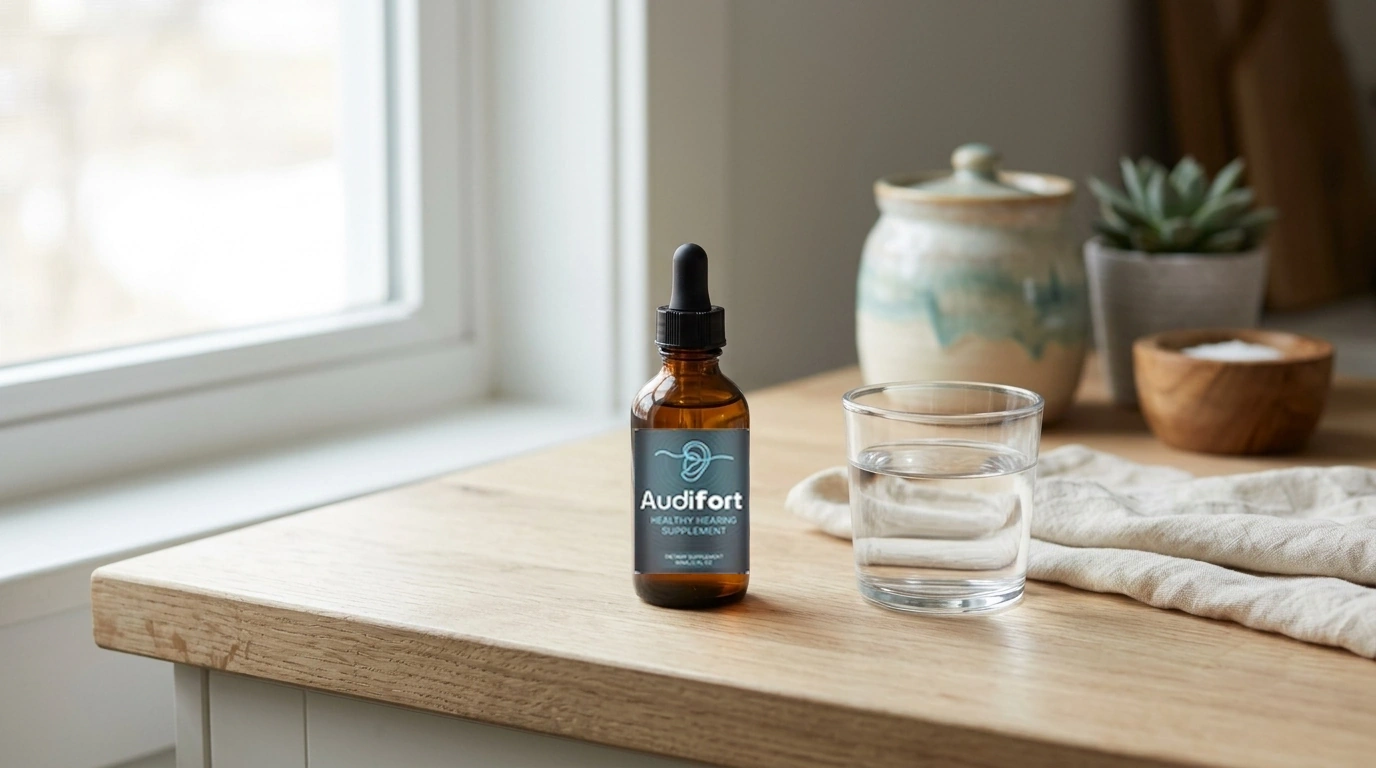
Audifort is a liquid, sublingual-or-in-water supplement built around six headline ingredients: maca root, grape seed, green tea, capsicum annuum, gymnema sylvestre, and GABA. It's positioned mainly toward people noticing gradual, age-related changes in hearing clarity, and it's the only product on this list marketed primarily around ear circulation rather than nerve repair or general vitality.
Human evidence for 2 ingredients, not ear-specific No hearing research on gymnema sylvestreThe strongest research here isn't ear-specific. Maca root has real human trials behind it for energy and mood, and GABA has placebo-controlled trials showing it can increase calming brain-wave activity within about an hour of dosing. Both are genuinely well-studied ingredients; neither has been tested specifically for tinnitus.
The ear-specific evidence is earlier-stage. Green tea's EGCG has been shown in cell and animal studies to protect cochlear hair cells from drug-induced damage, and grape seed's antioxidant compounds showed a similar protective effect in one small combination-antioxidant trial that reported reduced tinnitus loudness — though the ingredients weren't isolated in that study. Gymnema sylvestre is the outlier: it's well-researched for blood sugar control, but we found no published research connecting it to hearing at all.
- Plant-based liquid, no pills
- GMP-certified US facility
- Most transparent evidence write-up of the four
- No finished-formula trial
- Proprietary blend hides exact doses
- Gymnema has zero hearing research
Affiliate link — we may earn a commission at no extra cost to you.
For the full ingredient-by-ingredient breakdown with every cited source, see our complete Audifort review.
2. ZenCortex

ZenCortex shares several ingredients with Audifort — maca root, grape seed, green tea, gymnema sylvestre, and capsicum — but adds two more: ginkgo biloba and panax ginseng, giving it a heavier cognitive-support angle.
Mixed evidence, but tinnitus-specific Strong evidence for fatigue (ginseng)Ginkgo biloba is the most-researched ingredient for tinnitus specifically, in either direction, on this entire list. A systematic review of eight randomized, placebo-controlled trials of the standardized extract EGb 761 found statistically significant improvement in tinnitus loudness and severity across all eight studies. That's a genuinely strong result. But a separate Cochrane-style review reached a more cautious conclusion: looking specifically at trials where tinnitus was the primary complaint, it found no clear evidence that ginkgo outperformed placebo. Both reviews are real and published; they just don't fully agree.
Panax ginseng has a more straightforward case: a meta-analysis of 12 randomized controlled trials found a statistically significant reduction in fatigue with ginseng supplementation. That supports the "energy and clarity" framing on the label, but it isn't a hearing-specific effect.
- Only tinnitus-trial-tested ingredient in this comparison
- Broader antioxidant base than Audifort
- Ginkgo evidence genuinely mixed
- Ginkgo can interact with blood thinners
- No finished-formula trial
Affiliate link — we may earn a commission at no extra cost to you.
3. EchoXen
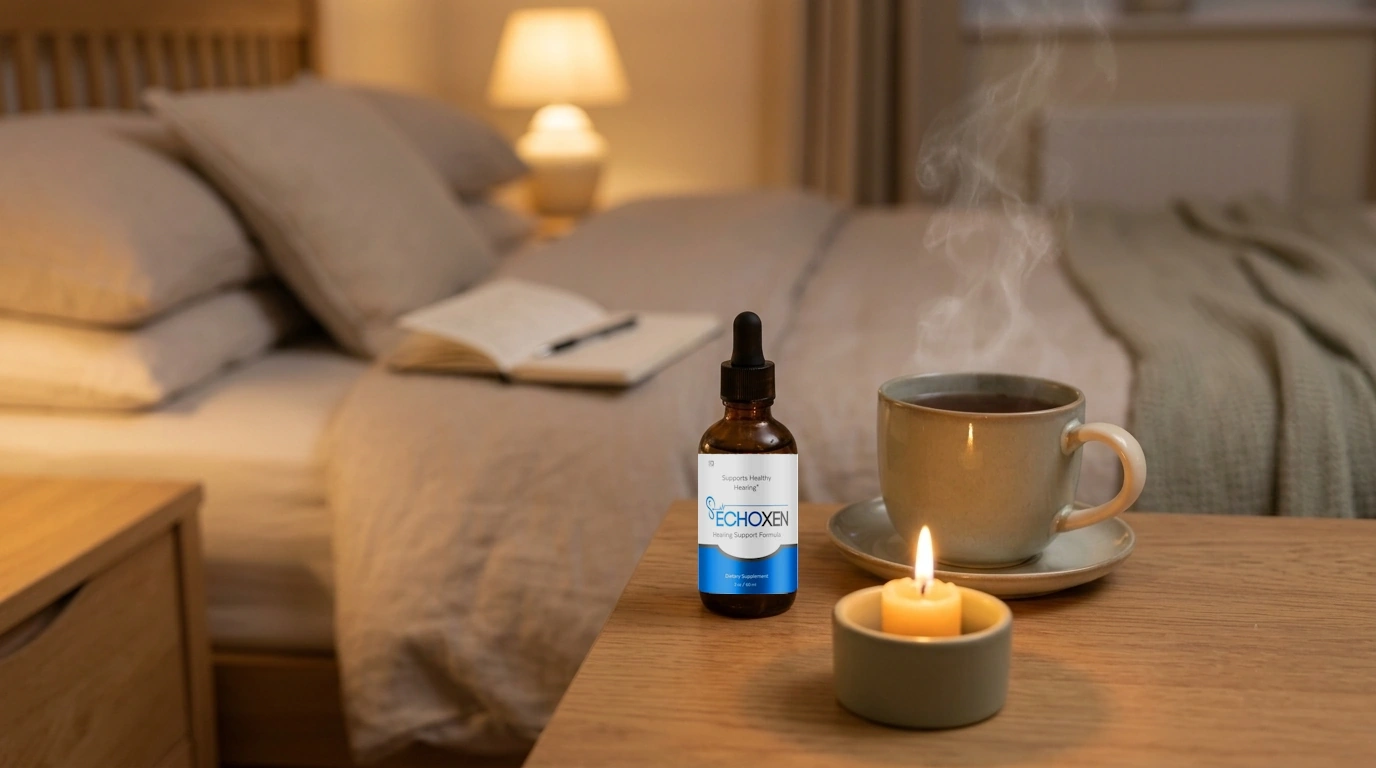
EchoXen leans adaptogen-heavy: mucuna pruriens, ashwagandha, maca root, epimedium, ginger, dong quai, and L-arginine — an ingredient list built more around stress response and circulation than the ear directly.
Strong evidence for stress/cortisol (ashwagandha) Thin evidence for 3 minor ingredientsAshwagandha is the standout here. A 2024 meta-analysis of nine randomized controlled trials (558 participants) found statistically significant reductions in perceived stress, anxiety, and serum cortisol. That matters for tinnitus indirectly: many people notice their ringing feels louder during stressful periods, so an ingredient with genuinely strong stress-reduction data is at least a plausible fit for that specific trigger — even though it isn't acting on ear tissue itself.
Mucuna pruriens is a natural source of L-dopa, and its best-documented human research is in Parkinson's disease, not hearing. L-arginine has decades of cardiovascular research behind it, including randomized trials showing improved blood flow in peripheral artery disease — again, general circulation research, not cochlear-specific. Epimedium, ginger, and dong quai have longer traditional-use histories than modern clinical trial support; we'd call the evidence for those three thin rather than absent.
- Strongest stress-reduction ingredient of the four
- May suit stress-triggered tinnitus specifically
- Least ear-connected formula of the four
- Guarantee reportedly varies by seller
Affiliate link — we may earn a commission at no extra cost to you.
4. Quietum Plus

Quietum Plus is the only capsule (not liquid) product in this comparison, which makes it the pick for anyone who dislikes droppers. Its ingredients — mucuna pruriens, maca root, ashwagandha, muira puama, ginger, and Mexican yam — are marketed around repairing the "ear-to-brain nerve connection."
"Nerve repair" claim unsupported by published research Shares ashwagandha's stress evidence with EchoXenThat specific framing is the weakest evidence claim of any product in this comparison. We found no published human or animal research on any of these ingredients regenerating or repairing the auditory nerve. What is published: mucuna pruriens' dopamine-related research (concentrated in Parkinson's disease), and ashwagandha's genuinely solid stress and cortisol data — the same studies referenced under EchoXen above, since both formulas use it. Muira puama and Mexican yam are the least-studied ingredients across all four products in this comparison; the available research is mostly small, older, or focused on libido rather than hearing or nerve function.
- Capsule format, no dropper
- Shares a well-evidenced adaptogen with EchoXen
- "Nerve connection" claim not supported by research we found
- Slower absorption than sublingual liquid
Affiliate link — we may earn a commission at no extra cost to you.

The Shared Ingredient Science, At a Glance
Because these four products overlap more than their marketing suggests, it's worth stepping back and looking at the evidence ingredient-by-ingredient rather than brand-by-brand.
| Ingredient | What the research actually shows | Found in |
|---|---|---|
| Ginkgo biloba | Mixed: positive across 8 dedicated tinnitus RCTs in one review; a second review found no benefit as primary treatment | ZenCortex |
| Ashwagandha | Strong, consistent human evidence for lowering stress/cortisol; not tested for tinnitus directly | EchoXen, Quietum Plus |
| Panax ginseng | Solid meta-analytic evidence for reducing fatigue | ZenCortex |
| Mucuna pruriens | Strong evidence in Parkinson's disease and fertility via L-dopa; no hearing research found | EchoXen, Quietum Plus |
| L-arginine | Decades of cardiovascular research on blood flow; not cochlea-specific | EchoXen |
| Green tea (EGCG) | Cell/animal studies show cochlear hair-cell protection; no human hearing trials yet | Audifort, ZenCortex |
| Grape seed extract | Animal studies plus one small combination trial showing reduced tinnitus loudness | Audifort, ZenCortex |
| Maca root | Solid human evidence for energy/mood; no hearing-specific research | Audifort, ZenCortex, EchoXen, Quietum Plus |
| Gymnema sylvestre | Well-studied for blood sugar control; no hearing research found | Audifort, ZenCortex |
| Muira puama / Mexican yam / epimedium / dong quai | Thin, mostly traditional-use evidence — least-studied group in this comparison | EchoXen, Quietum Plus |
The pattern that emerges: ginkgo biloba is the only ingredient across all four products with dedicated, if mixed, tinnitus trials behind it. Everything else is borrowed from adjacent research — energy, stress, circulation, or libido — and applied to hearing by inference rather than direct study. That doesn't mean these products don't help; user-reported improvement is common across this entire category. It means the evidence is indirect, and it's worth going in with that expectation rather than one set by marketing copy.
When a Supplement Isn't the Right First Step
Is pulsatile (a rhythmic whooshing or heartbeat-timed sound rather than a steady ring) · Started suddenly and in one ear only · Came with dizziness, vertigo, or a noticeable hearing change · Followed a head injury or loud acoustic event
These patterns can point to something a supplement won't address, and in some cases they're time-sensitive. For everyone else — gradual, age-related, or stress-linked tinnitus — a supplement is a reasonable thing to try alongside, not instead of, sound therapy and basic hearing protection.

Which One Actually Fits Your Situation?
- Noticing hearing changes with age, want the most-documented ingredient set: Audifort. It has the clearest evidence write-up of the four and is positioned specifically for this use case.
- Want the one ingredient in this category with dedicated tinnitus trials, comfortable weighing mixed evidence yourself: ZenCortex.
- Your tinnitus is noticeably worse during stressful weeks or when you're not sleeping well: EchoXen — its strongest ingredient (ashwagandha) has genuinely solid stress-reduction data, even though it isn't an ear-specific mechanism.
- You've tried a liquid dropper before and didn't like it, or you just prefer capsules: Quietum Plus, with the caveat that its "nerve repair" positioning is the least evidence-backed claim in this comparison.
Whichever you choose, give it the full bundle length (60–90 days) before judging results. Every product here works on a gradual-improvement timeline according to user reports, not an immediate one, and single-bottle purchases are the most common reason people give up before an ingredient like these would plausibly show an effect.
Frequently Asked Questions
Do tinnitus supplements like these actually work?+
Which of these four has the most tinnitus-specific research?+
Can I take one of these alongside medication?+
How long before I'd notice a difference?+
Are Audifort, ZenCortex, EchoXen, and Quietum Plus FDA approved?+
What if none of these work for me?+
Our Take
If you want a single recommendation: Audifort has the most complete, transparent evidence write-up for its ingredient set and is positioned specifically for the age-related hearing changes that bring most people to this comparison in the first place — which is why it's our top overall pick. ZenCortex is the strongest alternative if you want the one ingredient in this category with dedicated, if mixed, tinnitus trials behind it. EchoXen is worth a look specifically if stress is a driver of your symptoms. Quietum Plus is the pick if format — capsules over liquid — matters more to you than ingredient specifics.
None of these replace a conversation with a doctor, especially if your symptoms match the red flags above. For everyone else, the honest expectation is gradual, not guaranteed, improvement, evaluated over a full bundle rather than a single bottle.
Ready to Compare Pricing?
All four come with a money-back guarantee, so trying one isn't a one-way decision.
See Audifort Pricing →