Best Earplugs to Prevent Tinnitus from Getting Worse
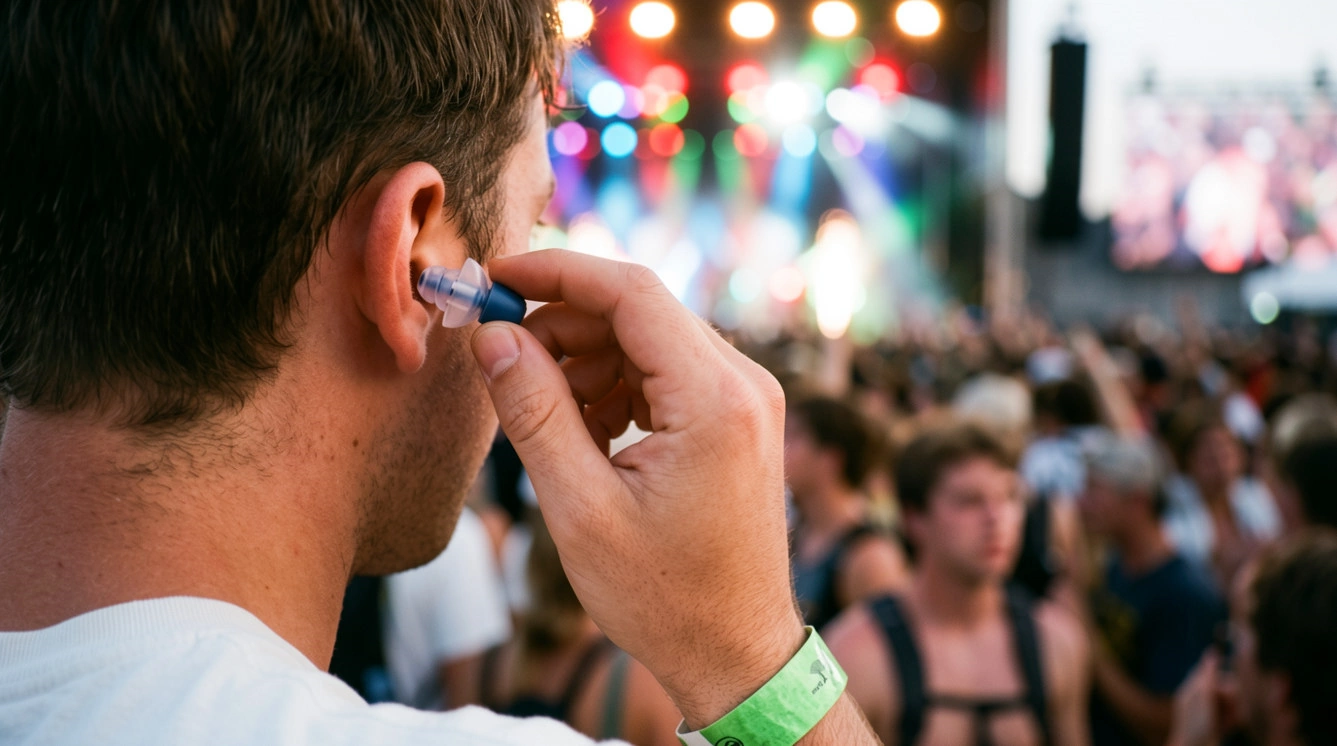
If your ears have ever rung for a day or two after a concert, a construction job, or a loud night out, you already have a rough sense of what's at stake here. That temporary ringing is a warning sign, and for a meaningful share of people, repeated exposure is what turns a temporary spike into something that doesn't fully go away. Earplugs are one of the simplest, cheapest tools for lowering that risk — but "wear earplugs" is only half the story. Which earplugs, when, and how often all matter more than most people realize, and getting that part wrong can backfire. Here's how to use them well.
Why Earplugs Matter for Tinnitus Protection
Tinnitus — ringing, buzzing, or hissing with no outside sound source — is frequently triggered or worsened by loud noise exposure, whether that's a single intense event like a concert or cumulative exposure over years, like working around machinery. Loud sound can damage the delicate hair cells in the cochlea, and unlike skin or muscle, those cells don't meaningfully regenerate once they're gone. That's the mechanical reason earplugs for tinnitus keep coming up in prevention advice: reducing the amount of damaging sound reaching the inner ear is one of the few genuinely evidence-backed ways to lower the odds of a new tinnitus spike or worsening of existing ringing.
But this isn't a "more is always better" situation. Earplugs are a noise-management tool, not a lifestyle — worn strategically around genuinely loud environments, they're protective. Worn constantly, including in ordinary quiet settings, they can start working against you, a pattern covered in detail further down. The goal of this guide is to help you figure out which earplugs actually fit your situation, and just as importantly, when to leave them out.

Quick Answer — Which Earplugs Are Best?
Scenario-based picks at a glance
- Concerts & live music
- High-fidelity flat-attenuation earplugs — they lower volume without muffling the music, which makes people far more likely to keep them in for the whole set.
- Sleep
- Soft silicone or moldable foam earplugs, and only if outside noise is genuinely disrupting sleep — not as a nightly default for everyone with tinnitus.
- Work & power tools
- Foam earplugs with a higher noise reduction rating (NRR), sized for the actual noise level of the job, following OSHA/NIOSH exposure guidance.
- Travel & commuting
- Reusable silicone or low-profile high-fidelity plugs — comfortable for extended wear, without cutting off situational awareness entirely.
- Frequent or professional use
- Custom-molded earplugs — higher upfront cost, but the best long-term fit and consistency for people who need protection regularly.
The rest of this guide walks through the reasoning behind each of these, plus how to avoid the most common mistake people make with tinnitus and earplugs: overusing them.
How Earplugs Help — and When They Don't
The mechanism behind earplugs for tinnitus is straightforward: less sound energy reaching the cochlea means less risk of the kind of acoustic trauma that can trigger or worsen tinnitus. Research on concert environments backs this up at a population level — studies comparing protected and unprotected concertgoers have found meaningfully lower rates of temporary hearing threshold shifts and post-event tinnitus among earplug users. One widely cited 2018 meta-analysis found that a majority of regular concertgoers show measurable, largely irreversible hearing threshold shifts over time, even without noticing day-to-day symptoms — which is the slow-building risk hearing protection is meant to interrupt.
But earplugs aren't a universal fix, and they're not a treatment for tinnitus that's already present. They reduce the odds of new or worsening damage from loud noise; they don't reverse existing damage or quiet ringing that's already there. And critically, the relationship between earplugs and tinnitus isn't one-directional — how and when you wear them matters as much as whether you wear them at all.
When Earplugs Are Helpful
- Concerts and live music — regularly among the loudest everyday environments people voluntarily enter, often 100-110+ decibels for hours at a time.
- Loud traffic or motorcycle riding — sustained exposure to engine and wind noise adds up over a commute.
- Power tools and yard equipment — chainsaws, leaf blowers, and lawn mowers frequently exceed safe exposure limits within minutes.
- Aviation — cabin noise on commercial flights is moderate but sustained over hours; small aircraft and private pilots face much higher levels.
- Loud one-off events — fireworks, sporting events, motorsports, and similar short bursts of high-decibel sound.
When Earplugs Can Backfire
This is the part of the tinnitus-and-earplugs relationship that doesn't get nearly enough attention. Wearing earplugs constantly, including in normal, non-hazardous environments, can gradually increase the brain's sensitivity to sound — a process researchers describe as increased central gain, essentially the auditory system "turning up the volume" internally to compensate for reduced input. Over time this heightened sensitivity can make tinnitus more prominent once the earplugs come out, and in some cases contributes to hyperacusis (a reduced tolerance for everyday sound levels).
Controlled studies on healthy volunteers have found that wearing foam earplugs for as little as two weeks can measurably reduce sound tolerance. Clinical guidance on hyperacusis and tinnitus management consistently warns against wearing hearing protection in quiet, everyday settings "just in case" — protection is meant for genuinely loud environments, not as a constant buffer against the world.
If you notice you're reaching for earplugs even in ordinary quiet rooms, or feeling more bothered by normal sounds than you used to, that's worth mentioning to an audiologist rather than continuing the pattern.
Types of Earplugs to Consider
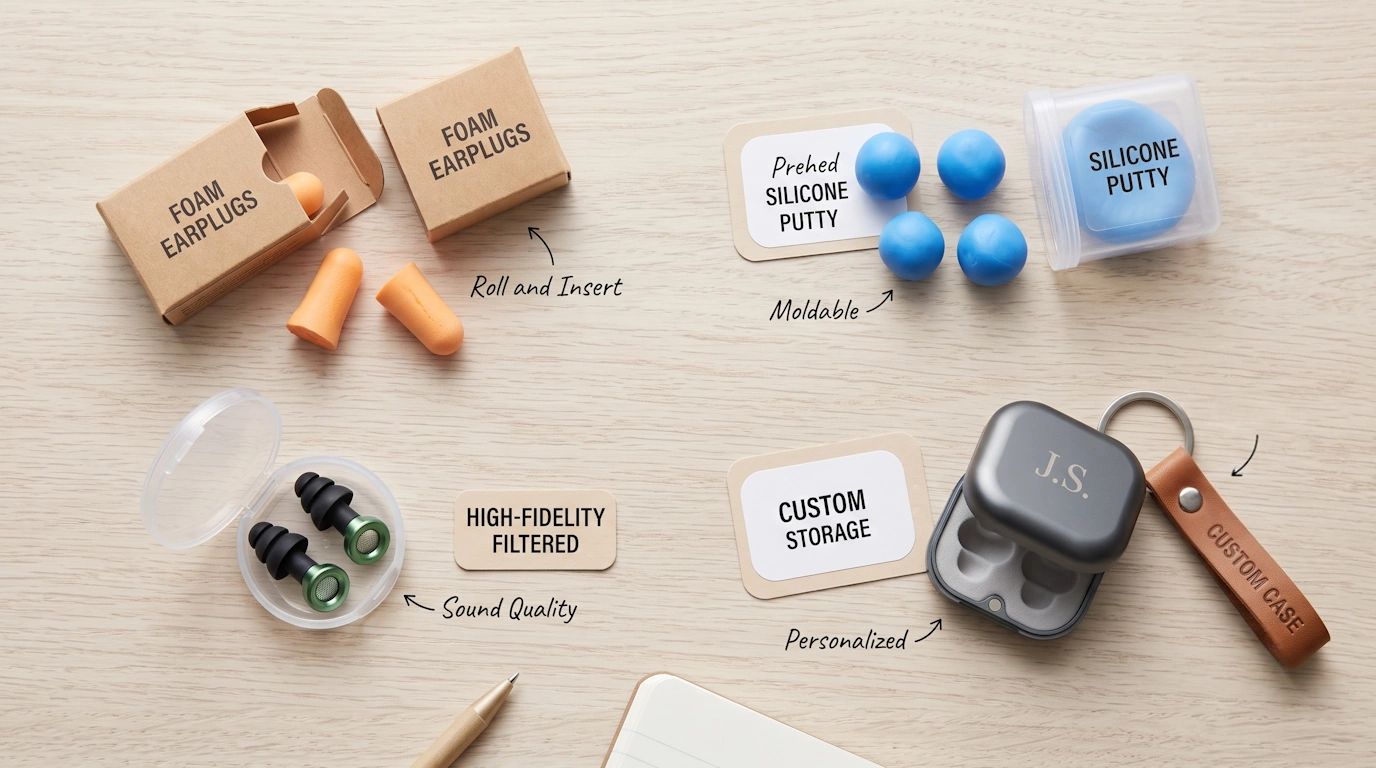
Not all earplugs are built for the same job. Here's how the main categories differ, including where each one shines and where it falls short.
Foam Earplugs
Highest raw attenuationFoam earplugs are the cheapest, most widely available option, and they offer some of the highest noise reduction ratings on the market — often in the 29-33 NRR range on the label, though real-world protection is meaningfully lower once you account for fit (more on that below). They're disposable, which is convenient for hygiene but means an ongoing cost if used often. Their main drawback is sound quality: foam plugs muffle high frequencies more than low ones, which is fine for sleep or industrial noise but makes music and speech sound dull and distant — one reason people often take them out mid-concert, defeating the purpose.
High-Fidelity Earplugs
Best for music and social settingsHigh-fidelity or "musicians'" earplugs use a flat-attenuation filter that reduces volume fairly evenly across frequencies rather than disproportionately cutting highs. The CDC specifically notes that this flat-attenuation design is what allows these plugs to preserve the fidelity of sound, which is the whole point at a concert. They typically offer somewhat lower peak attenuation than foam (commonly in the 17-26 dB range depending on the model and filter), but because they sound so much more natural, people are far more likely to actually wear them for the full event instead of removing them out of frustration — which matters more in practice than the number on the package.
Silicone or Moldable Earplugs
Best for comfort and sleepSilicone putty-style earplugs are pressed and shaped rather than rolled and inserted, which many people find more comfortable for side-sleeping and extended wear. They form more of a barrier-style seal over the ear canal opening rather than sitting inside it, which some users find gentler on sensitive or fragile ear canal skin. Attenuation varies by product and tends to be moderate rather than industrial-strength, which is generally appropriate for sleep, since the goal there is dulling household or street noise, not blocking hazardous sound levels.
Custom-Molded Earplugs
Best long-term fitCustom-molded earplugs, made from an impression of your specific ear canal (either through a professional fitting or an at-home moldable kit), offer the most consistent seal and comfort of any option, which matters because fit — not just the label's NRR — is the single biggest factor in real-world attenuation. They're the standard choice for musicians and people who need hearing protection regularly, since a proper seal means the flat-attenuation filter design actually performs as intended. The tradeoff is upfront cost, which is substantially higher than foam or generic high-fidelity plugs, making them best suited to frequent or professional use rather than occasional concerts.
Best Earplugs by Situation
For Concerts and Live Music
High-fidelity flat-attenuation earplugs are the clear default here. Look for a stated attenuation in roughly the 17-26 dB range and, if possible, interchangeable filters so you can adjust for particularly loud venues or front-row positioning. For extremely loud festival settings or if you're standing near speaker stacks, stacking a higher-attenuation option or opting for a custom-molded pair with a stronger filter is reasonable.
For Sleep
Soft silicone or foam earplugs sized for comfortable side-sleeping work well when outside noise (traffic, a snoring partner, thin apartment walls) is genuinely disrupting sleep. That said, this is also the situation where the overuse caution matters most: if your tinnitus tends to feel louder in a totally silent room, some low-level background sound — a fan, white-noise machine, or soft nature sounds — is often a better nightly strategy than blocking out sound entirely with earplugs every night.
For Work or Tools
For power tools, lawn equipment, and other hazardous-noise environments, foam earplugs with a higher NRR are usually the right call, since raw attenuation matters more than sound fidelity in these settings. If noise exposure is a regular, ongoing part of your job, this is also the strongest case for custom-molded protection or a proper workplace hearing-conservation fitting rather than generic disposable plugs.
For Travel and Everyday Noise
For flights, trains, and commuting, comfortable reusable silicone or low-profile high-fidelity plugs strike a reasonable balance — enough noise reduction to make the trip more comfortable without cutting you off from announcements or conversation entirely. This is a lower-stakes category than concerts or power tools, so comfort and convenience can reasonably outweigh maximum attenuation.
How to Choose the Right Pair
A few practical factors matter more than brand name once you've picked the right category above.
NRR vs. Real-World Comfort
The Noise Reduction Rating on the package is a laboratory number, measured under ideal, supervised conditions — not what you'll typically achieve in daily use. OSHA's standard method estimates real-world protection by subtracting 7 from the labeled NRR and dividing by two; NIOSH's more conservative method simply cuts the labeled NRR in half. In practice, this means an earplug labeled NRR 33 might realistically deliver somewhere in the range of 10-15 dB of actual protection for an average user — and considerably less than that with a poor fit. The takeaway: don't assume the highest number on the shelf is automatically the safest choice, and don't assume a modest-looking NRR on a well-fitting high-fidelity plug is inadequate for its intended use.
Comfort for Long Wear
An earplug that's technically well-rated but painful or irritating after twenty minutes won't get worn consistently, which defeats the purpose. Side-sleepers generally do better with low-profile or flat-sitting silicone options rather than foam plugs that protrude. People with sensitive or thin ear canal skin may find silicone putty gentler than foam's expansion-based seal. If a particular material causes itching or irritation, that's worth switching over rather than pushing through, since irritation itself can become a reason people abandon protection altogether.
How to Use Earplugs Safely
Correct insertion technique has a bigger effect on actual protection than most people expect — the CDC notes that a simple way to check foam earplug fit is to count out loud while cupping and uncupping your hands over your ears; if your voice sounds noticeably different with a good seal versus without, the earplugs are doing meaningful work. For foam plugs, that means rolling them into a thin cylinder, pulling the outer ear up and back to straighten the canal, and holding the plug in place while it expands. For high-fidelity and silicone options, follow the specific manufacturer's insertion guidance, since fit mechanics differ by design.
Just as important as insertion is restraint: reach for earplugs when you're heading into genuinely loud, specific situations — not as an all-day accessory. If you find yourself wanting to wear them in quiet rooms or ordinary conversations "just in case," that's a signal to dial back rather than a sign you need stronger protection, for the central-gain reasons covered above.
Cleaning and Maintenance
Reusable silicone and high-fidelity earplugs should be cleaned regularly with mild soap and water (or the manufacturer's recommended solution) and fully dried before storage, to avoid buildup and reduce the risk of ear canal irritation or infection. Foam earplugs are generally disposable and shouldn't be reused indefinitely — manufacturers commonly recommend replacing frequently used reusable filtered earplugs every few months, and swapping foam plugs once they're visibly dirty, torn, or no longer expanding fully. Store reusable pairs in their case rather than loose in a pocket or bag, where they pick up debris and lose their seal integrity over time.
Signs You May Need More Than Earplugs
Earplugs are a prevention tool, not a diagnostic one, and they're not the right response to every kind of tinnitus. A few warning signs mean it's time to see a doctor or audiologist rather than simply adding hearing protection:
Sudden hearing loss — especially in one ear, which can be a medical urgency requiring prompt evaluation.
Tinnitus in one ear only — asymmetric tinnitus warrants a hearing evaluation to rule out causes beyond general noise exposure.
Pulsatile tinnitus — ringing that beats in time with your heartbeat is often vascular in origin and isn't something hearing protection addresses.
Dizziness alongside new tinnitus — this combination points toward inner-ear or balance-system involvement worth a professional look.
Tinnitus that's rapidly worsening despite consistent hearing protection — a sign something beyond noise exposure may be driving it.
Comparison Table — Earplugs vs Other Tinnitus Protection Options
Earplugs are one tool among several for managing noise-related tinnitus risk. Here's how the main options compare on evidence, use case, and cost.
| Option | Best For | Evidence Strength | Safety Notes | Typical Cost |
|---|---|---|---|---|
| Foam earplugs | Power tools, industrial noise, hazardous environments | Solid for attenuation; well-established occupational standard | Fit-dependent; muffles sound quality | $5–$20 (multi-pack) |
| High-fidelity earplugs | Concerts, live music, social settings | Population studies show reduced post-event tinnitus and threshold shifts | Lower peak attenuation than foam; better real-world compliance | $15–$40 |
| Custom-molded earplugs | Frequent or professional noise exposure | Best real-world attenuation due to consistent fit | Higher upfront cost; still requires strategic (not constant) use | $100–$300+ |
| Earmuffs | Very loud, sustained industrial noise | High attenuation; less fit-dependent than plugs | Bulkier; less practical for social or music settings | $20–$60 |
| Sound therapy (white noise, sound generators) | Masking or blending with existing tinnitus, especially for sleep | Conditionally recommended in clinical guidelines | Very low risk; not a noise-exposure preventive | $0–$100+ (apps to devices) |
Where this leaves things: earplugs — matched to the situation — are the most direct, evidence-backed tool for reducing new noise-related tinnitus risk. They work alongside, not instead of, other habits covered in our 5 daily habits that help protect your hearing as you age guide and the broader safe-listening guidance in our noise-induced hearing loss breakdown.
Frequently Asked Questions
Do earplugs help prevent tinnitus from getting worse?+
Can wearing earplugs too often make tinnitus worse?+
What type of earplugs are best for concerts if I have tinnitus?+
Are foam or high-fidelity earplugs better for tinnitus?+
Should I wear earplugs when sleeping with tinnitus?+
How much noise reduction do I need to protect my hearing?+
Final Recommendation
There's no single "best" earplug for tinnitus — the right choice depends on the noise you're actually facing, how well a given pair fits your ears, and how consistently you'll wear it when it matters. High-fidelity plugs for concerts and social noise, foam or custom options for hazardous work environments, and comfortable silicone for the occasional noisy night are all reasonable, evidence-aligned choices for their specific situations.
The habit that matters more than the product: use hearing protection strategically, around genuinely loud environments, and leave your ears open the rest of the time. That balance — not constant use, not total avoidance — is what the research on both noise-induced tinnitus and earplug overuse consistently points toward. Pair it with the broader daily habits in our hearing-protection habits guide, and if new or worsening symptoms show up despite reasonable precautions, a hearing evaluation is the next right step, not a stronger earplug.
Curious What's Actually in an Oral Tinnitus Supplement?
See Audifort's full ingredient-by-ingredient evidence breakdown, backed by a 60-day money-back guarantee.
Check Audifort Pricing →Affiliate link — we may earn a commission at no extra cost to you.
For more on how oral supplements fit alongside hearing-protection habits, see our side effects and safety overview on the Audifort review homepage.
Sources & References
This article draws on the following clinical guidance, government resources, and published research. We link directly to each source so you can read the original material rather than take our summary on faith.
- "Provide Hearing Protection." Noise and Hearing Loss, Centers for Disease Control and Prevention (CDC/NIOSH). cdc.gov
- "What Is Tinnitus? — Causes and Treatment." National Institute on Deafness and Other Communication Disorders (NIDCD), National Institutes of Health. nidcd.nih.gov
- "NRR Ratings Explained: What the Numbers on Your Ear Plugs Actually Mean." Readymax. readymax.com
- "Noise Reduction Rating (NRR)." EAR Customized Hearing Protection. earinc.com
- "Should You Use Earplugs for Sound Sensitivity?" Hearing Loss Explained. hearinglossexplained.com.au
- "Earplug Mistakes That Can Make Tinnitus Louder." Treble Health. treblehealth.com
- "Hyperacusis." Wikipedia, citing preliminary research on hearing-protection overuse and sound tolerance. en.wikipedia.org
- "Earplug Use." Hyperacusis Focus, summarizing Anari et al. 1999 and Formby et al. 2003/2007 on sound-tolerance changes with earplug use. hyperacusisfocus.org
- "Concert Earplugs Tested: Which Protect Hearing Without Killing Sound," citing a 2018 meta-analysis in the Journal of the Association for Research in Otolaryngology on threshold shifts among concertgoers. inspiredbybeatz.com
- "Decreased Sound Tolerance in Tinnitus Patients." PMC, National Institutes of Health. ncbi.nlm.nih.gov
Occupational noise-exposure figures and NRR derating formulas reflect OSHA and NIOSH methodology as summarized by the CDC and industry hearing-protection resources cited above.